Listen
The Art of Transformation
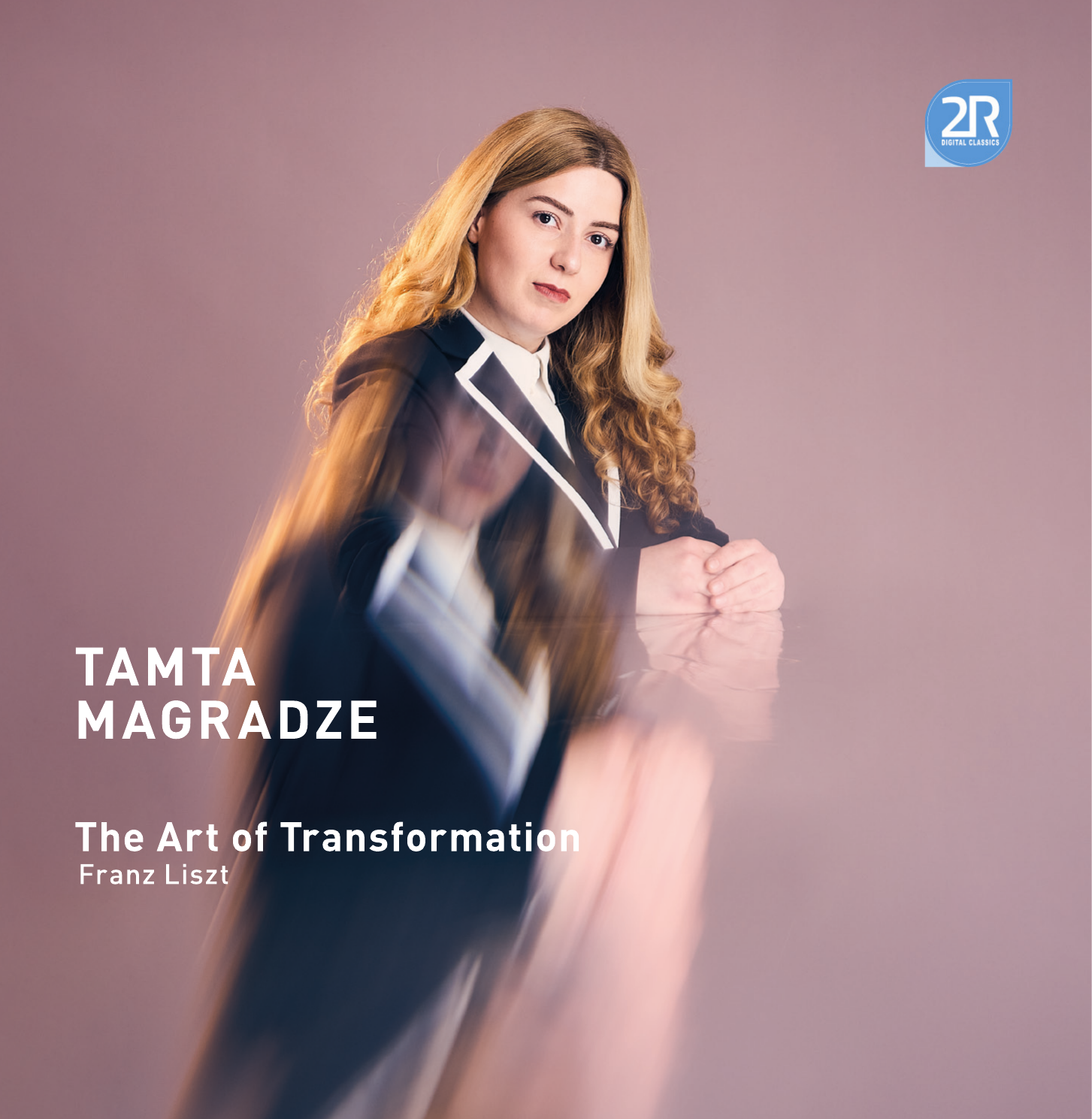
Pianist Tamta Magradze’s debut album, The Art of Transformation, focuses entirely on Franz Liszt. It brings together music by Handel, Bach, and Schubert transformed by Liszt for the piano, alongside his original work Großes Konzertsolo.
Tracklist
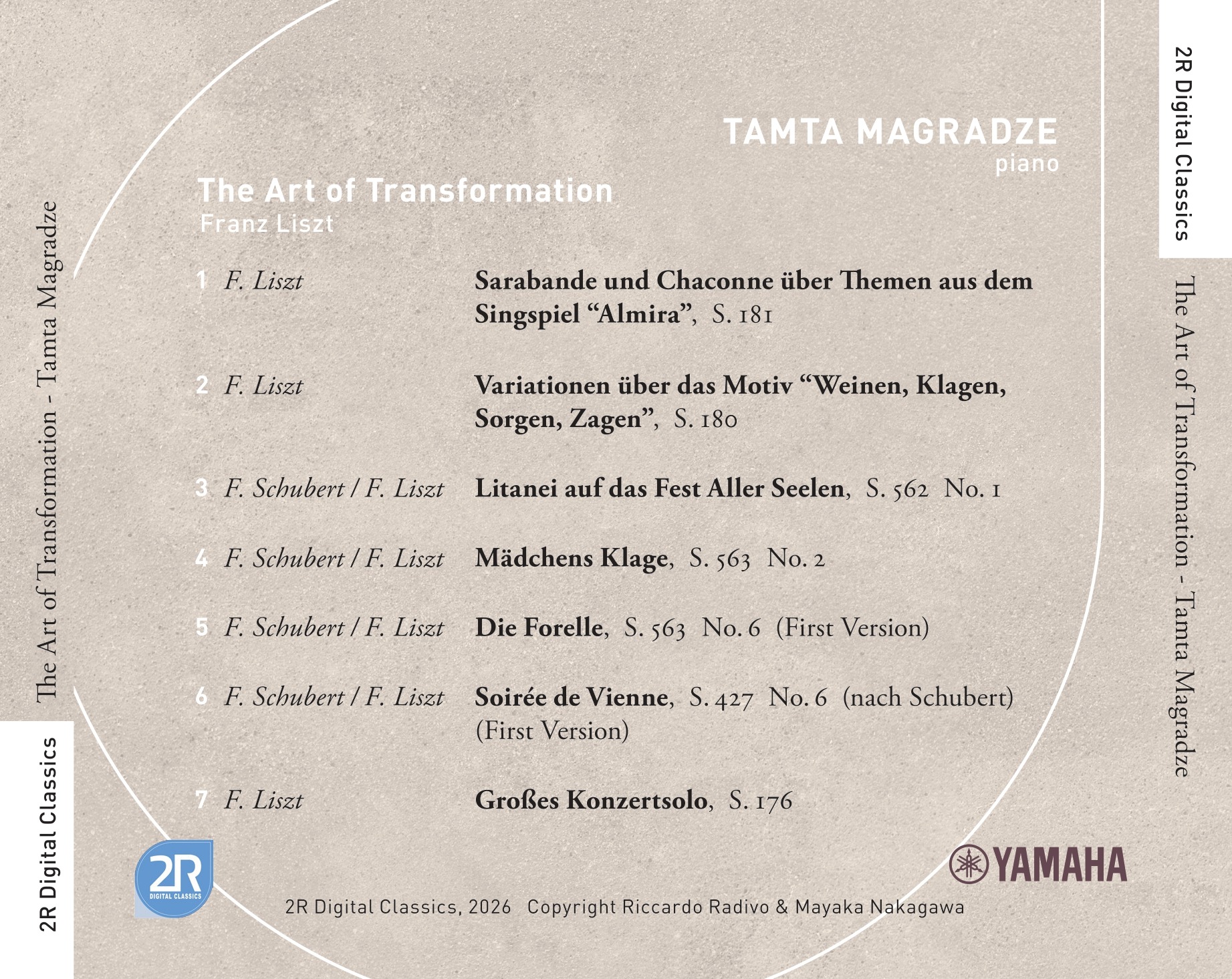
- 01
F. LisztSarabande und Chaconne über Themen aus Almira, S. 181
- 02
F. LisztVariationen über das Motiv "Weinen, Klagen, Sorgen, Zagen", S. 180
- 03
F. Schubert / F. LisztLitanei auf das Fest Aller Seelen, S. 562 No. 1
- 04
F. Schubert / F. LisztMädchens Klage, S. 563 No. 2
- 05
F. Schubert / F. LisztDie Forelle, S. 563 No. 6 (First Version)
- 06
F. Schubert / F. LisztSoirée de Vienne, S. 427 No. 6 nach Schubert (First Version)
- 07
F. LisztGroßes Konzertsolo, S. 176
About the Album
This album began with a simple question: how can music change while remaining itself ? At the centre of this question is Franz Liszt. I have always been fascinated by his approach to the music of other composers. His transcriptions are far more than arrangements, he preserves the spirit of the original work while allowing it to live again through the piano in a completely new form. Throughout this recording, music moves from one world into another: a Baroque theme unfolds into something dramatic and virtuosic, a song turns into a piano piece, and a short musical idea becomes a whole story.
A Journey Through Transformation
The album opens with Liszt’s Sarabande and Chaconne on themes from Handel’s Almira. I chose this work for its grand, ceremonial character. Handel’s music remains clearly recognisable, but Liszt gives it greater scale and intensity through richer colours, stronger contrasts and a more orchestral use of the piano. In Weinen, Klagen, Sorgen, Zagen, transformation becomes more personal. Written as a set of variations on a theme from Bach’s Cantata BWV 12 and closely related to the Crucifixus from the Mass in B minor. The work passes through pain and tension before finding release in the concluding chorale. The Schubert song transcriptions Litanei, Mädchens Klage and Die Forelle reveal a more intimate side of Liszt. Here, the piano has to become many things at once: the singer, the accompaniment and the storyteller. Even without words, the poetry remains alive through phrasing and atmosphere. In Soirée de Vienne No. 6, Liszt takes Schubert’s waltzes and expands them into a sophisticated concert piece, combining Viennese charm with pianistic brilliance. Liszt’s own Großes Konzertsolo presents transformation from another perspective. Composed in the early 1850s and later reworked as the Concerto pathétique for two pianos, it stands at the heart of this idea. It is one of Liszt’s most demanding works, both technically and musically. The entire work grows from a few fundamental motifs that are continuously transformed through lyrical, dramatic and virtuosic passages. What connects all these works is the idea that transformation does not erase the original, it gives it another life.
Personal Connection
Liszt’s music has accompanied me for many years, and I have always felt drawn to his transcriptions. I admire the way he respects the original source while allowing himself the freedom to create something new. For me, transformation is not only a musical process, but also a personal one. A piece changes through time, through the instrument and through the artist performing it. The score remains the same, but every performer brings something unique to it.
- Tamta Magradze